
For anyone running a youth soccer academy, the calendar is not just a list of dates. It is the roadmap for player development and club reputation.
When you commit your teams to specific soccer tournaments, you are not simply paying an entry fee. You are investing your club’s resources, your coaches’ time, and most importantly, the trust of your families. Once that weekend begins, families evaluate the experience in real time.
The reality is that not all tournaments are created equal. We have all experienced the early drive to fields that are not properly prepared, brackets that make little competitive sense, or communication that feels reactive instead of organized. That does not move players forward.
If your academy is serious about development, these seven factors should guide your tournament selection.
Competitive Parity and the Science of Flighting
No one benefits from a 10 to 0 scoreline. Whether on the winning or losing side, the developmental return is minimal.
Academy directors prioritize events that understand proper flighting. A well run tournament does more than group teams by age. It evaluates competitive history, league standing, and current level of play to create balanced brackets.The objective is the challenge zone. Players should be pushed tactically and physically while still having a fair opportunity to compete.
Flighting takes work. It requires data, communication with clubs, and sometimes difficult placement decisions. When that effort is made, it shows. When it is not, it shows even more clearly.

Infrastructure and Facility Layout
The venue shapes the entire experience.
Professional quality surfaces are essential for both player safety and style of play. A poor field is not just an inconvenience. It changes how the game is played and increases risk.
Beyond the surface, layout matters. Directors and coaches often manage multiple teams at once. Centralizing age groups and organizing venues logically allows proper oversight and strengthens club identity.
At scale, venue planning is not convenience. It is logistics management. When facilities are scattered without coordination, the weekend becomes fragmented.
Technology and Operational Clarity
The best run soccer tournaments are the ones where logistics feel invisible.
Reliable platforms for registration, scheduling, and real time updates are now expected. Coaches should be able to access opponents, field numbers, and scores without confusion.
When scheduling, communication, and updates fail, the disruption is immediate. When they work, no one talks about them. That is the standard.
Professional management also respects travel realities, ensuring game times reflect common sense and consideration for families.
Professionalism in Officiating
The global referee shortage is a reality across the sport.
Premier events distinguish themselves by how they manage it. Investing in referee communication, structure, and support creates stronger match environments.
Assignor organization, clear reporting lines, and visible tournament leadership matter more than most clubs realize. When referees feel supported, the quality of competition improves. When they do not, the environment deteriorates quickly.
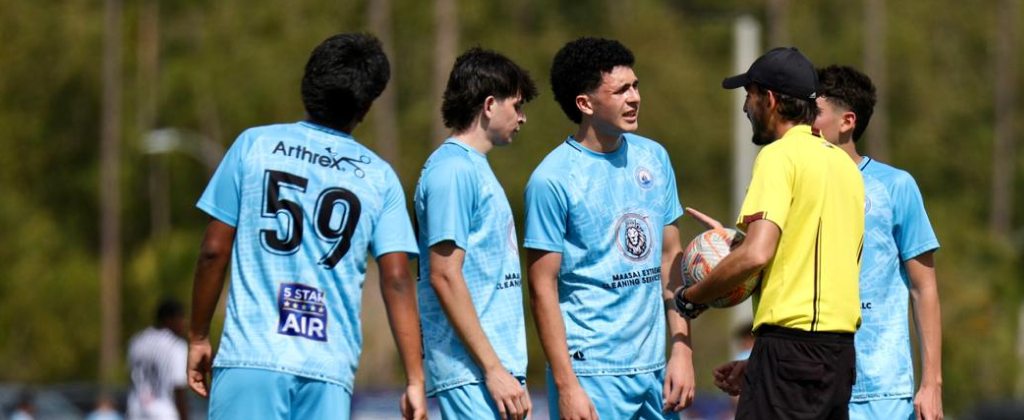
Strategic Scouting and Exposure Opportunities
For older age groups, tournaments are often strategic decisions.
Academies look for events that actively facilitate scouting presence. This means organized showcase formats, accessible digital player information, and a structure that allows evaluation.
College coaches show up where competition is consistent and organization is reliable. Exposure is not simply about invitations. It is about creating an environment that supports meaningful assessment.
The Off Field Culture and Event Environment
Soccer is more than ninety minutes on the field.
When a tournament creates a professional atmosphere, organized gathering spaces, and a cohesive event identity, it elevates the entire weekend.
A well structured environment influences how players carry themselves and how families perceive the club experience. Atmosphere communicates standards before the first whistle.
Safety, Medical Staff, and Risk Management
Premier events treat player welfare as foundational.
On site medical staff, clear weather protocols, and accessible leadership provide visible reassurance. Lightning plans, contingency structures, and emergency coordination are rarely noticed when everything runs smoothly. That is precisely the point.
Preparation builds trust. And trust is difficult to earn but easy to lose.

Why Experienced Management Matters
These seven factors do not happen by accident. They are the result of deliberate planning, operational discipline, and experience on the ground.
In today’s youth sports landscape, expectations continue to rise. Clubs are not simply registering for games. They are aligning with events that reflect their own standards.
The youth soccer market is crowded. There are more tournaments competing for your calendar than ever before. For academy directors who think long term, the decision is not about filling weekends. It is about protecting development.
When you prioritize competitive parity, strong facilities, professional logistics, and player welfare, you protect the process. That return is not measured in trophies. It is measured in growth.
The best soccer tournaments feel like partnerships between organizers and clubs. Expectations are clear. Standards are shared. Execution is consistent.
When an event consistently delivers on those principles, clubs return. Not because of marketing, but because of trust.
Quality over quantity is not a slogan. It is a strategy.